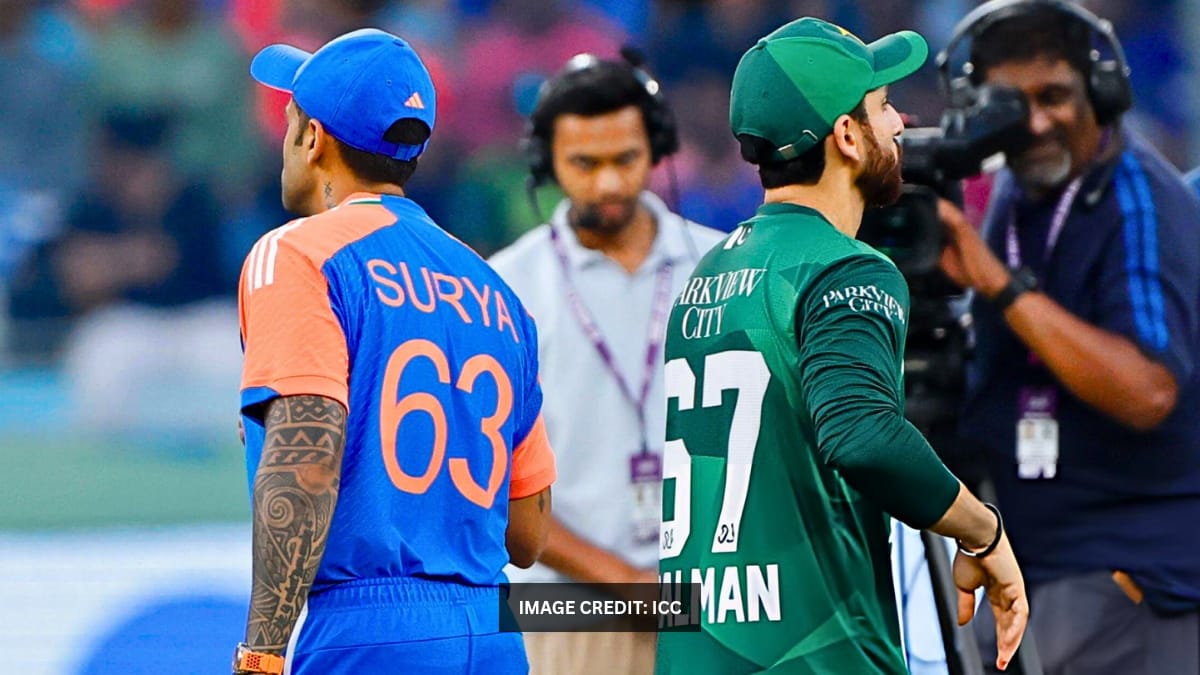
The 2026 ICC Men’s T20 World Cup has been thrown into uncertainty after the Government of Pakistan confirmed that its national cricket team will not play the highly anticipated group-stage match against India. The decision, announced through an official government statement on social media platform X, allows Pakistan to participate in the tournament but explicitly bars the team from taking the field against India on February 15, 2026.
While the announcement confirmed Pakistan’s presence at the global event, it offered no explanation for the refusal to face India. This silence has only intensified speculation around political, diplomatic, and governance tensions influencing international cricket.
A Blow to Cricket’s Biggest Rivalry
An India-Pakistan encounter is widely considered the crown jewel of any ICC tournament. These matches routinely break global viewership records, generate massive broadcast revenue, and dominate cricket discourse worldwide. Since bilateral cricket between the two nations ceased over a decade ago, ICC events have remained the only stage where fans could witness the historic rivalry.
Since 2012, the International Cricket Council has consistently placed India and Pakistan in the same group to ensure the blockbuster fixture takes place during tournaments. If Pakistan follows through with its decision, the 2026 T20 World Cup will become the first men’s ICC event since 2010 where an India-Pakistan match does not occur in the group stage.
Background: Tensions Escalate After Bangladesh Exit
Pakistan’s stance comes in the aftermath of a major controversy involving Bangladesh. In January, Bangladesh were removed from the T20 World Cup after declining to play matches in India, citing security concerns. Pakistan was the only nation to openly back Bangladesh’s request for neutral venues and criticized the ICC for what it described as selective decision-making that favored India.
PCB chairman Mohsin Naqvi publicly accused the ICC of double standards and stated that Pakistan’s participation would ultimately depend on government approval. That approval has now arrived — but with conditions.
The Pakistani squad has already been named within the ICC’s deadline, reinforcing expectations that the team would attend the tournament. Sri Lanka, which is co-hosting the event alongside India, will serve as Pakistan’s exclusive venue for all scheduled matches.
Pakistan are placed in Group A alongside India, Netherlands, USA, and Namibia. Their campaign begins on February 7 against the Netherlands, followed by matches against the USA on February 10 and Namibia on February 18. The India fixture, scheduled between these matches, will be forfeited if the boycott proceeds.
By refusing to play, Pakistan will automatically concede two points to India — a potentially decisive setback in a tightly contested group.
Beyond the loss of points, Pakistan will also suffer a significant statistical disadvantage. Under ICC Playing Conditions, a forfeited match negatively impacts the defaulting team’s net run rate (NRR), while the opposing team’s NRR remains unchanged.
According to Clause 16.10.7, Pakistan’s full 20 overs will be counted in net run rate calculations as if they had been bowled out without scoring. This penalty could severely hurt Pakistan’s chances of qualifying for the knockout stages, especially if teams finish level on points.
Cricket analysts have noted that this rule effectively punishes the defaulting team twice — once in points and again in tournament mathematics.
Knockout Stage Uncertainty
The ICC has yet to clarify what would happen if India and Pakistan were drawn to face each other in the knockout rounds. Whether Pakistan would boycott such a match as well remains unknown. The absence of clarity raises serious logistical and commercial questions for tournament organizers, broadcasters, and sponsors.
An ICC spokesperson has not yet commented publicly, and the Pakistan Cricket Board is reportedly yet to formally notify the ICC of the government’s decision.
Political Decisions, Sporting Consequences
The move highlights the growing influence of geopolitics on international sport. While cricket boards are theoretically autonomous, decisions involving India and Pakistan often transcend sport, involving diplomatic considerations at the highest levels of government.
Former players and fans across the cricketing world have expressed disappointment, arguing that the rivalry is bigger than politics and that fans are once again being denied a marquee contest.
Financial and Commercial Impact
From a commercial standpoint, the absence of an India-Pakistan match is a significant setback. Broadcasters typically pay premium rights fees largely driven by the guaranteed viewership of this fixture. Advertising rates, sponsorship deals, and digital engagement all spike during these games.
Industry experts believe the ICC could face substantial revenue losses if the boycott is enforced, potentially impacting future tournament planning.
What Happens Next?
All eyes are now on the ICC and the PCB. Whether diplomatic channels reopen, conditions change, or the boycott becomes permanent will shape not just the 2026 T20 World Cup, but also the future of cricket’s most iconic rivalry.
For now, the cricketing world waits — caught between sport, politics, and uncertainty.